
The only key, and the owner is away
Imagine a volunteer from a local church or club who has agreed to look after a member's house for a week. They hold the only key, they feed the animals, water the plants and check the place each morning. On the third day the key goes into the lock and will not turn, or it turns and the door stays shut. The owner is hours away, and the animals are waiting.
That kind of arrangement is common in the Millville foothills, where neighbors and congregations help one another. Country properties come with wells, barns and long private roads, and when a household is away, someone nearby usually holds the key. It is a generous habit, and it puts a lot of weight on one piece of metal.
This page is about getting back inside a house without breaking anything. It lays out the sensible order of options, from the gentlest to the last, and explains why that order matters. The aim is simple: the door opens, the house stays whole and the person who owns it comes home to a lock that still works.
It also helps to see the whole path before you start. Each step has a cost in time, in money and in risk to the house, and the steps are ordered from lowest cost to highest. Skipping ahead feels productive in the moment, but a forced door or a broken pane turns a small delay into a large repair. Following the order keeps the problem the size it started.
Step one: slow down and confirm the problem
Before anything else, work out what is actually wrong. Is the key the right one? On a ring of similar keys, it is easy to try the wrong one repeatedly. Does it go all the way in? Does it turn partway and stop? Does the knob or lever move freely without opening the latch? Each of these tells you something different.
Try the other doors, carefully and calmly. A house in the country may have a front door, a back door, a garage entry, a porch door and a door from a mudroom. If you have been given only one key, check whether it is meant for a different door. Also confirm with the owner whether any door is deliberately left unlocked or secured another way.
Stay alert to safety. If you are worried about a person inside who might be unwell, that is a reason to call emergency services, not a locksmith. If animals are shut in the house and the weather is hot or cold, that changes how urgent the situation is, and you should say so clearly when you reach out.
Step two: ask the owner and look for a spare
The next step is a phone call or message to the owner or a family member. They may know about a spare key, a lockbox, a keypad code or a neighbor who holds a copy. They may also know that the lock has been acting up. That history can save a lot of guessing.
If the owner can authorize a locksmith, that makes things smoother. We need to confirm that the person asking for access has the right to ask. A message from the owner, or a call that confirms the arrangement, helps us do that. We take the check seriously because it protects the home.
If a spare exists and can be reached, use it. It is the gentlest option, and it may end the problem without a visit. If the spare is far away or cannot be found, move on to the next step, and let the owner know what is happening so there are no surprises. A short message is enough, and it gives the owner a chance to suggest something you had not thought of, such as a neighbor with a second key or a window latch that was left open on purpose.
- Confirm you are using the right key and the right door before anything else.
- Ask the owner about a spare, a lockbox, a keypad code or a neighbor with a copy.
- Get the owner's permission clearly before anyone works on the lock.
- Tell the owner if animals are inside, or if the weather makes the situation urgent.
Step three: call a locksmith to open it without damage
When the gentle options are used up, the next step is a professional. A trained locksmith can open many standard residential locks without drilling or breaking anything, leaving the lock, the door and the frame as they were. This is usually the right balance between speed and care, and it is what we aim for first.
We will not describe bypass methods on a web page. What matters is that the approach depends on the lock. A deadbolt, a knob set and a lever handle each respond to different tools, and a lock with an unusual keyway or a security feature may call for a different plan. A locksmith looks at the lock before choosing what to do.
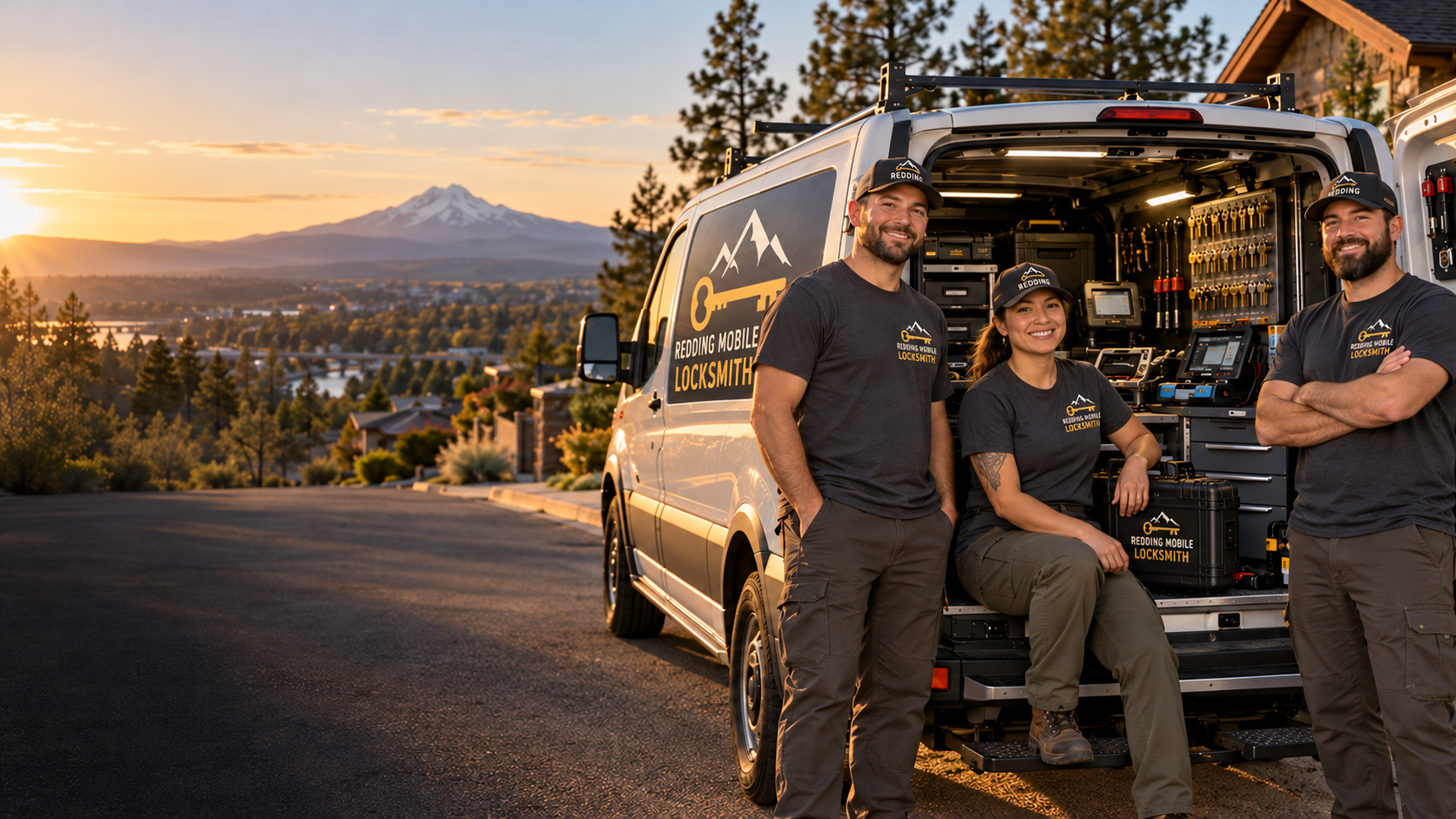
Our branded team arrives in uniform with a branded service van that carries professional tools, key cutting and programming equipment, and common hardware. After the door is open, we test the lock to see why the key failed. Sometimes the cause is simple, like a worn key, and sometimes the lock needs attention. We explain either way.
We also look at the door and the frame while we are there. A lock that fails to open is sometimes a symptom of a door that has shifted, a strike that no longer lines up or a latch that has swollen in damp weather. Fixing only the lock would leave the cause in place, so we check the whole assembly before we call the job done.
Step four: when the lock itself has failed
Sometimes the door will not open because the lock has broken inside. A snapped spring, a sheared cam, a bent spindle or a seized cylinder can leave the key turning without effect. In that case, opening the door takes more than finesse. It may involve removing the cylinder or the whole lock set.
This is the point where drilling or cutting may come up. It is a legitimate professional option for a lock that cannot be opened any other way, and it is always explained first. The lock is normally replaced in the same visit, and the new lock is keyed to work for the people who need access.
If you suspect the lock has failed, tell us what it did. A key that turned freely, a knob that spun, a bolt that stopped halfway or a lock that made a grinding sound all help us plan. See our lock repair page and lock installation page for what comes after the door is open.
Last resort: forcing a door or window
Only when everything else has failed, or in a true emergency, does it make sense to force an entry. That means breaking a pane of glass, kicking a door or prying a frame. These actions cause damage that costs far more than a locksmith visit, and they leave the home unsecured afterward. A broken window in a house with no one home is an invitation.
In a real emergency, such as smoke or a person in danger, emergency responders will make that decision, and they have the training to do it safely. For an ordinary lockout, there is almost never a good reason to take that route. Waiting a little longer for the right help is the better choice.
If you are tempted by a window, remember that a window latch is usually weaker than a door lock, and it is the first place someone with bad intentions would look. Opening one deliberately and leaving it unfixed can turn a locked house into an open one. Whatever you decide, make sure everything is secured again before you leave.
If forced entry has already happened, such as a damaged door after an attempted break in, tell us. The work then includes repairing the frame and securing the home. See our strike plates and door frames guide for why the frame matters as much as the lock.
Country homes have their own wrinkles
Houses in the Millville area often have more than one entry, plus outbuildings with their own locks. A lockout at the main door can mean the key ring is overloaded, or that a key to an outbuilding has gone missing. A single visit is a good moment to sort out which key belongs to which door.
Distance changes the shape of a lockout. A house on a long private road with a locked gate is harder to reach than a house on a main street. Tell us how the gate opens, whether the road is gravel, and whether a larger vehicle can get to the door. The more we know, the better we can plan the route and the tools. Tell us as well if the property has more than one entrance, since a back door off a gravel turn can be easier to reach than the front.
Weather matters too. In summer, heat and dust get into locks, and in winter, cold and moisture can freeze cylinders. Our guides on why locks stick in hot summer weather and winter lockouts and frozen locks explain what can happen and how to avoid it.
Animals, wells and what cannot wait
Some tasks cannot wait for a convenient hour. Livestock need feeding and water, pets need care, and a house with a well pump or a woodstove may need attention. When you contact us, say plainly what is waiting and why it matters, so we can set priorities.
If animals are inside a house in hot weather, treat that as urgent and tell us immediately. If a pet is in distress, contact an animal rescue or emergency services as well. Getting the door open is important, but the animal comes first, and your judgment about its condition matters. Keep notes on how long the animal has been inside, whether it has water and what the temperature is, and share that information with whoever you call.
In cold weather, a house with no heat and water lines at risk of freezing is another time critical case. We cannot give medical or plumbing advice, but we can move the lockout up the list if you tell us the stakes. Clear information is the most useful thing you can give.
Wells and pumps are worth a mention. If a house relies on a well pump that needs resetting, a pressure tank that needs attention or a woodstove that needs tending, tell whoever is in charge of the property. A locksmith can open the door, but the household systems behind it belong to people who know them.
Making sure it does not happen twice
After you are back inside, take a moment to prevent a repeat. If the lockout came from a worn key, have a fresh copy cut from the original. If the lock was failing, replace or repair it. If the arrangement itself was the problem, with one key held by one volunteer, make a plan.
A simple plan has a spare key held by a second trusted person, a clear record of who holds what, and a way to retire keys when someone's role ends, so access never lingers longer than the arrangement. Our guide on storing spare keys safely offers ideas, and a lock strategy for cabins and second homes applies well to homes that are often empty.
For a home that others look after regularly, a keypad lock or a lockbox with a changeable code lets you grant and remove access without handing out metal keys. See smart locks, promises and practical limits for a balanced look at what they can and cannot do.
Related help for Millville homes
If the lockout is really about a vehicle, see car lockouts in Millville. If you are thinking about changing the keys after a period of shared access, rekeying in Millville explains how. For worn locks, see lock repair in Millville.
The broader house lockout service page and residential locksmith page describe the full range of home work, and the Millville page covers the community itself. Our neighbors at Palo Cedro are part of the same service area.
Asking for help from Millville
Our phone line is coming soon, so please use the request form on the contact page. Tell us where you are, which door is locked, what the key did, whether anyone or any animal is inside and how to reach the property. Mention the owner and whether they have approved the visit, and say whether a spare, a code or a lockbox has already been tried and what happened.
The more clearly you describe the situation, the better prepared the crew will be. We would rather read a few extra sentences than arrive without the right tools, so do not worry about writing too much. When we arrive, we confirm the details, explain the plan and begin.
Common questions
What is the gentlest way to get back into a house?
The gentlest options are a spare key, a lockbox code or a keypad code from the owner. If none exists, a trained locksmith can often open a standard lock without drilling or breakage. Forcing a door or window should come last, since it causes damage that costs more than the call you are avoiding.
I am not the owner. Can you open the door for me?
We need to confirm you have the right to enter. A message or call from the owner, or another reasonable confirmation, helps us do that. Tell us about the arrangement when you send the request, and we will explain what to have ready so the visit goes smoothly.
Will you need to drill my lock?
Not usually. Many standard locks can be opened without drilling. Drilling is kept for locks that are broken, seized or built in a way that makes gentler methods unworkable. If it is needed, we explain it first, and the lock is normally replaced during the same visit.
What if animals are shut inside the house?
Tell us right away in your request. Animals and weather change how urgent the call is. If a pet is in distress, contact an animal rescue or emergency services too. We cannot give veterinary advice, but we can set the order of work around what you tell us.
How do I get back to a property on a long private road?
Describe the road, the gate and any landmarks in your request. Tell us if the gate has a code or a lock and whether a larger vehicle can reach the door. If the van cannot get close, we may park nearby and carry our tools the rest of the way.
How do I request a house lockout in Millville?
Our phone line is coming soon, so please use the request form on the contact page. Include where you are, the door involved, what the key does and whether anyone or any animal is inside. A clear description lets the crew arrive prepared.