
Home / Redding / Car Lockout in Redding
Redding car lockout
Locked Out of Your Car in Redding: A Plain Guide
Picture a caregiver visiting a relative, arms full, door closed, keys on the seat. This page walks through that moment for Redding drivers, from the first check to the last test of the lock, in ZIP 96001, 96002 and 96003.
Picture a visit that goes sideways
Imagine someone driving across Redding to look in on an elderly relative. They carry a bag of groceries, a folder of paperwork and a cup of coffee, and they set the keys on the seat to loosen their grip. The door swings shut, the lock catches, and the visit that was supposed to take an hour now has a problem in front of it.
This is a made up scene, but a very ordinary one. The details change from one driver to the next, yet the pattern repeats across the city: parking lots at medical offices, driveways in older neighborhoods, curbs near shopping, and stretches of road near the river. A person is expected somewhere, the car will not open, and the first instinct is to panic.
The first thing worth saying is that this is a solvable problem. A locked car is inconvenient, not dangerous, as long as nobody is inside it. The rest of this page is how a calm response looks in Redding, with the heat of summer, the wet of winter and the busy roads in mind.
The first two minutes
Start by making sure everyone is safe. If a child or pet is inside the vehicle, stop reading and call emergency services. Everything else on this page can wait. If no one is inside, take a breath, step away from traffic and look at the car from a short distance, which often shows you something you missed up close.
Then walk the whole vehicle and try every door, the rear hatch and the trunk. Look through each window to find the key or fob. Note whether the engine is running, whether the lights are on and whether the keys are visible from outside. Those facts will be the first things a dispatcher wants to know.
If you have a spare key, work out how to get to it. A relative at home might be able to bring it, or a household member might hold one. Sometimes that is the simplest route. If not, we can help, and the sections below explain what the visit looks like.
What to tell us when you ask for help
Use the request form on the contact page, since the phone line is coming soon. Name the part of Redding you are in, then describe the place: a lot behind an office, a driveway, a roadside, a shopping center. Do not worry about street names. A plain description of the surroundings and a note about anything that makes the car hard to reach is enough.
Add the vehicle make, model and approximate year. Say whether the keys are inside, lost or broken, and whether it is a push button start or a regular key. If you have a spare fob, say that too. If someone is waiting with the car, say who and whether they are comfortable, since heat and cold both change how urgent the situation feels.
Finally, say who owns the vehicle. If it is a borrowed or rented car, or belongs to the person you are caring for, mention it. A locksmith has to be sure the person asking has a right to the vehicle, and being ready with registration or identification makes that conversation short.
- Name your part of Redding and describe the surroundings in plain words.
- Give the make, model and approximate year of the vehicle.
- Say whether the key is inside, lost or broken, and whether the engine is running.
- Mention push button start, a spare fob or a keypad on the door.
- Say who owns the car and whether anyone is waiting with it.
Redding parking lots: sun, shade and crowds
Parking lots are where many Redding lockouts happen. Medical offices, grocery stores, workplaces and shopping centers all have rows of cars parked for a short time by people in a hurry. A tight lot makes it hard to work around a vehicle, so describing your spot and which side has clearance helps the crew plan how to approach.
Summer heat makes lots uncomfortable and sometimes unsafe. Asphalt holds heat, shade is scarce and a closed car turns into an oven. If you are waiting, move to shade or into a nearby building. If you feel unwell, get help for yourself first and leave the car for later. Nothing about a lock is worth a heat illness.
If you must wait, think about what you can do while you do. Stay off the pavement edge, keep any water you have with you and let someone know where you are. A relative waiting for your visit would much rather hear that you are delayed than learn later that you stood in the sun for the sake of a lock.
When the lot is busy, our crew parks the van where it does not block others, works near the door and keeps the area clear of bystanders. You are welcome to stay and watch. Seeing what is done and how it is done is part of what keeps the job honest.
Narrow spaces are also worth mentioning. If your car is parked tight against a wall, a curb or another vehicle, tell us. The crew can often work around it, but advance notice means the right tools come out of the van and you spend less time in the way of other drivers.
Heat, cold and the Redding calendar
Redding has hot, dry summers and mild, wet winters. In July and August, a car locked in direct sun climbs to uncomfortable temperatures within the afternoon, and fobs left on dashboards can fail from heat. If you suspect a fob battery, replace it before it dies. Our guide on fob battery basics explains the warning signs.
In winter, moisture and cold matter more. Rain gets into door seams and locks, and a cold night can leave a door frozen to its weather seal. A door that seems locked may only be stuck. Do not pry at it, and do not pour hot water over the lock, since sudden temperature changes can damage the glass, the paint and the lock itself.
Spring and fall are gentler, but they carry their own habit: people drive more with the windows down, leave doors unlatched and set keys on seats while they carry things. The strongest prevention in any season is the same, which is to pick one pocket for the keys and use it every single time.
Trailheads and river access around the city
Redding sits on the Sacramento River, and people head out to walk, run, fish or launch a boat. Trailheads and river access points are quiet, a little remote and often out of cell range. A lockout there is more complicated than in a lot, because getting a message out can take effort and the place is hard to describe.
If you are out of signal, drive back toward where you have service, or ask someone nearby to help you reach the request form. Describe the access point by its general character: a trailhead lot, a riverside pullout, a boat ramp. We cannot work from street names we do not know, but a clear description of the setting gets the crew pointed the right way.
Many trail lockouts happen because keys are lost on the hike, not locked inside. If you suspect the key fell out of a pocket along the way, say so. It changes the job from a lockout to a replacement. Our guide on carrying keys while hiking, fishing and boating has practical habits that stop it happening again.
What the crew does when it arrives
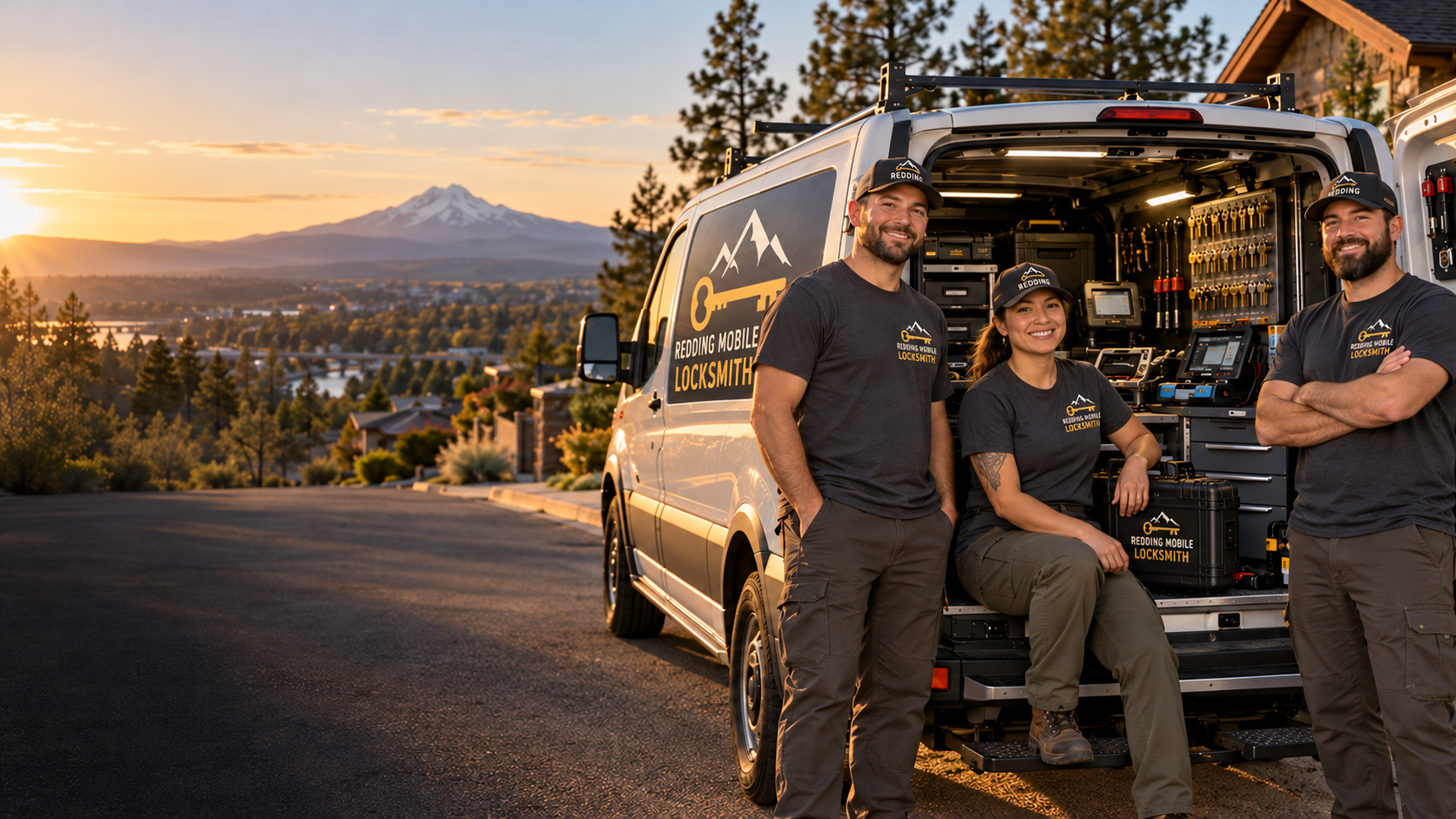
Our uniformed crew arrives in a branded service van, introduces itself and begins by confirming a few facts: who you are, who owns the vehicle and what happened. This is not a formality. A locksmith who opens cars without asking is a problem for everyone, and the check protects you as well.
The entry itself is done with professional tools designed to leave paint, glass and seals alone. Different vehicles need different approaches, and the crew picks the one that suits yours. We do not describe the steps in detail, because explaining them would help the wrong person more than the right one. What matters is that the door opens and nothing about the car looks different afterward.
Before leaving, the crew asks you to test the doors, the handles and the lock. If a key needs to be cut or programmed, that happens at the van with its key cutting and programming equipment. You can see the full picture on our page for car lockout, which covers the service in more depth.
When the key is lost, not just locked inside
If the key is gone entirely, the work has two steps: get into the car, then make a new key. For many newer vehicles, the second step includes programming a chip so the engine will start. That is a separate task from cutting the metal, and it needs the right equipment and the right information about your vehicle.
The local page on car key replacement in Redding explains how that works, and the general page on car key replacement covers the types of keys. If you want to understand the technology, transponder keys explained is a plain guide.
Lost keys also raise a question about security. If someone could find your key and your car, rekeying or reprogramming may be worth considering. Ask the crew what the options are for your vehicle. For a house key, the answer might be rekeying; see rekeying in Redding for the house side.
Caregivers, families and other busy drivers
Caregivers, parents and anyone juggling errands are among the most likely people to lock keys in a car. Hands full, mind elsewhere, a person to look after: it is the perfect setup for a mistake. That is not carelessness. It is the ordinary result of doing too much at once.
If you are in that position, a few small habits help. Keep a spare key with someone you trust, not in the car and not hidden outside. Use a lanyard or a clip so the key is attached to you while you load or unload. And if you carry a fob, keep a spare battery at home. Our guide on a spare key now versus later goes into detail.
For people helping an older relative, other lock questions often come up too, such as easier handles or a keypad that avoids a hidden key. See easier locks for aging parents at home, and house lockout in Redding if a front door is part of the story.
Related help in Redding
A car lockout often comes with neighbors: a sticking lock, a worn key, a house that needs rekeying or a business with the same problem. The rest of our Redding pages cover those. See lock repair in Redding for sticking or damaged locks, and commercial locksmith in Redding for offices and shops.
For the bigger picture, our Redding page describes the city, its neighborhoods and what the team does across them. If you are outside the city, we also serve Anderson, Shasta Lake and Cottonwood, and the areas page lists the rest.
If your problem is something broader, such as a key that will not turn or a vehicle that needs a new key made, see automotive locksmith or key programming. And if it is urgent at any hour, the 24 hour emergency locksmith page explains how we handle that.
After the door is open
Once you are back in, stop for a moment before driving away. Check that the key works in the ignition or the start button, that the doors lock and unlock from outside, and that the interior handles respond. Fix anything odd now, while the crew is still beside the car.
Then think about the next time. A spare key, a pocket habit, a fresh fob battery and a note of where each key lives can save you the whole experience. A short conversation with the crew about your specific vehicle may also reveal options you did not know about, such as a spare made at the same visit.
Finally, put the lesson to work. Tell the person you are helping or the family you live with what happened, so everyone knows where the spare is and what to do next time. The goal is not to avoid every mistake. It is to make the next one much smaller.
If you drive for work, or share a vehicle with a household, take it one step further. Agree on where the spare lives, who is allowed to ask for help and how the owner is reached if the person at the car is not the owner. A short note on the refrigerator or in a phone is enough, and it makes the next stressful moment far more routine.
Common questions
Is it safe to wait in my car lot in summer?
Not always. Asphalt lots hold heat and shade is limited, so move to shade or inside a building if you are waiting. If you feel unwell, get help for yourself before anything else. If a child or pet is locked in the car, call emergency services first and do not wait for a locksmith.
What if I am at a trailhead with no signal?
Drive back to where you have service, or ask someone nearby to help you send the request. Describe the access point by its character, such as a trailhead lot or a riverside pullout, rather than by street names. Tell us if you think the key was lost on the trail.
Can you help if the car belongs to someone else?
Yes, if the person asking has a right to the vehicle. Expect to be asked about ownership, usually through registration or identification. If you are caring for a relative or driving a borrowed car, explain the situation and have whatever paperwork you can find nearby. It keeps the process short.
Will my fob still work after you open the car?
Usually yes. Opening the door does not affect the fob or its chip. If the fob was already weak, the battery may need replacing, and the crew can often check it. If the key is lost, a new key must be cut and programmed, and we can explain what the options are for the old one.
Do you serve neighborhoods outside the center of the city?
Yes. We cover Redding as a whole, including ZIP 96001, 96002 and 96003, and the nearby Shasta County communities. Tell us where you are and describe the surroundings, and the crew plans the visit around that. A plain description of the setting is more useful than guesses about distance.
How do I ask for help right now?
The phone line is coming soon. For now, use the request form on the contact page and include your location, the vehicle details and what happened. Keep your phone with you so the team can follow up. If anyone is in danger, contact emergency services before anything else.