
Home / Etna / Car Lockout in Etna
Etna car lockout
Car lockout help for drivers in Etna, California
Picture a traveler who left the interstate for Scott Valley, stepped out of the car in Etna, and heard the doors lock behind them. Here is how a lockout is handled, vehicle by vehicle, and what to have ready.
A lockout in a small valley town feels different
Most lockouts happen in a parking lot with a shop three doors away and a dozen people walking by. Etna is not that kind of place. It sits in Scott Valley in Siskiyou County, with older downtown buildings, ranch properties on every side and mountain views that tell you how far you are from a big city. When your keys end up on the seat of a locked car here, the quiet that makes the town pleasant also makes the problem feel larger.
Imagine a traveler who left the interstate to see the valley, parked near the edge of town, set the keys on the dashboard while checking a map, and shut the door. Nothing is broken. Nobody did anything unusual. The car simply latched with the keys inside. That ordinary mistake is the most common reason people call a locksmith, and it is one of the most solvable problems we deal with.
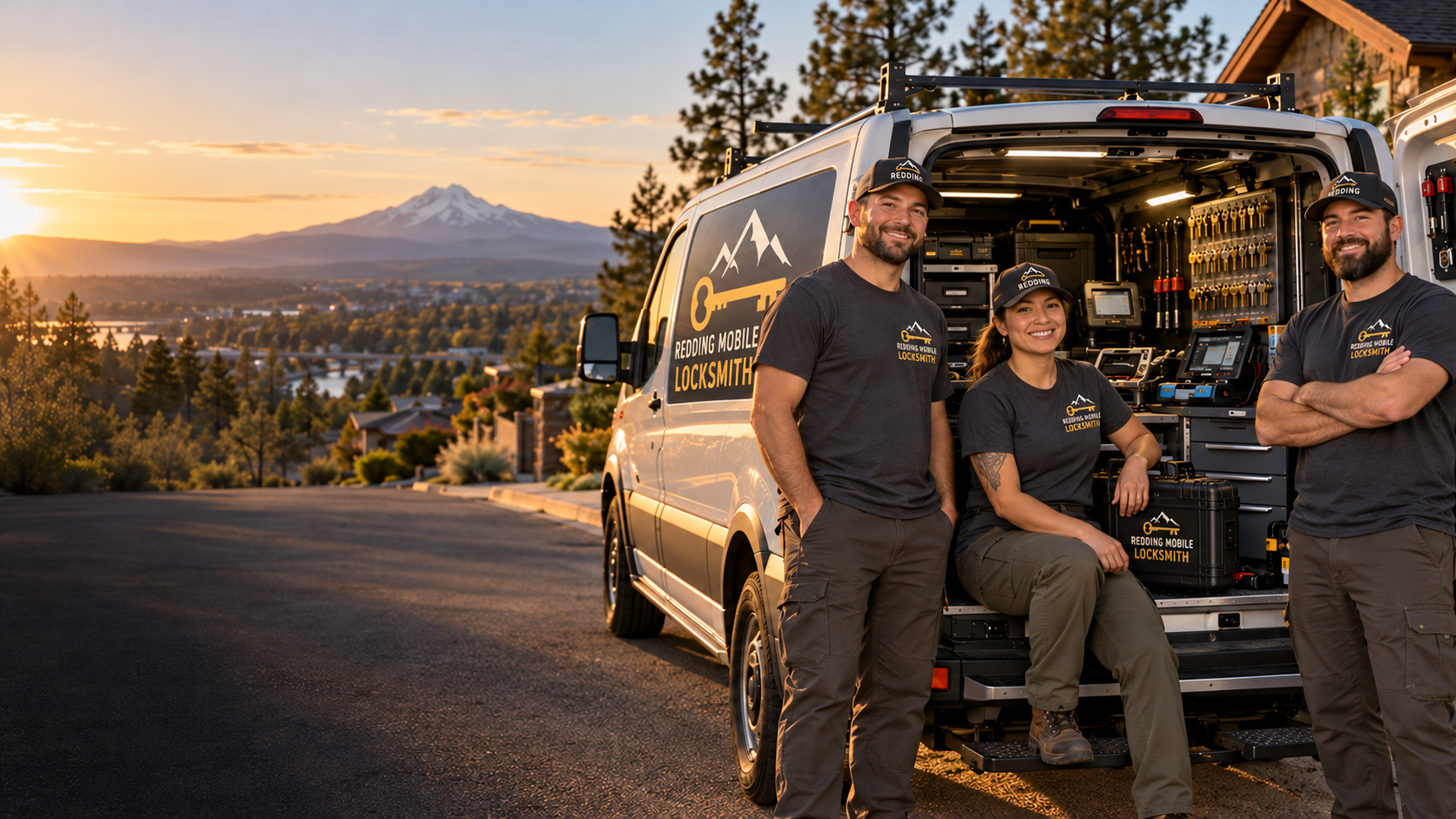
Our team travels in a branded service van carrying professional tools, key cutting and programming equipment and common hardware, so the work happens where your vehicle is parked. You do not need to arrange a tow or move the car. If you are in Etna, the Etna service page explains how we cover the town, and this page explains what happens once a car lockout is on the schedule.
What we need to know before the van rolls
A good dispatcher asks a short list of questions, and each one changes how the job is done. What is the vehicle, and roughly how old is it? Are the keys inside, lost, or simply not working? Is the engine running? Is anyone or anything inside the vehicle? Where exactly is it parked, and is it safe to stand next to? Those answers let the technician bring the right tools instead of guessing at the roadside.
Have the vehicle's make, model and approximate year ready, because door and lock designs vary enough that a plan for one truck does not fit another. Know whether it has a key you turn, a key fob with buttons, or a push button start with a smart key. If the fob is the thing that is locked inside, say so. It tells us that the electronics are likely fine and only the doors need opening.
If a person or animal is inside a closed vehicle, stop reading and call emergency services first. A locksmith is a good second call in that situation, never the first. Everything else on this page assumes the only thing locked in the car is a set of keys, a phone or a bag.
Sedans, trucks, vans and SUVs open in different ways
A sedan, a pickup, a cargo van and a tall SUV each present a door differently. Window glass sits at a different height, weather stripping fits differently, and the linkage inside the door that connects the lock to the handle follows a different path. A technician who works on vehicles regularly learns these differences and chooses a method that suits the door instead of forcing one approach on every car.
The goal is always the same: operate the lock from the inside without leaving a mark. Professionals use purpose made tools that slip between the glass and the seal, or a protective wedge that opens a small gap in the frame, and then a long reach tool that presses a lock button or pulls an interior handle. The wedge is padded so paint and trim stay intact. When done properly there is nothing to see afterward.
Larger vehicles add one wrinkle. A work van or full size truck may have a taller roofline and deeper door, so the reach is longer and the technician needs a clean view inside. Park on a level, open spot if you can, and keep the area beside the driver door clear. A trailer hitched behind you is fine, but mention it so we know how much room there is.
- Tell us the vehicle make, model and rough year.
- Say whether the key is a turn key, a fob or a push button smart key.
- Mention if the engine is still running.
- Note if a trailer or load limits access to the doors.
- Confirm nobody and nothing living is inside the car.
Why newer cars need more care than older ones
Older vehicles often have simple door linkages and a lock button that moves a rod. Newer ones can have side impact airbags in the door, wiring running through the same cavity as the lock cable, and window glass that sits snug in an electric channel. Poking blindly into that space can pinch a harness or knock a clip loose. That is exactly the kind of damage people worry about when they think of a lockout, and it is why method matters.
A trained technician knows where not to push. The pry gap is made at a spot away from airbag components, and the reach tool is guided by sight rather than force. If an interior button needs pressing, the tool presses it. If the handle needs pulling, the tool pulls it. Nothing about a careful lockout involves drilling a lock or breaking glass.
Some cars also lock themselves again after a short time if a door is opened but the engine is not started, or if the fob is carried out of range. Others have a deadlock feature that disables the interior button after the doors are locked with the key. If your vehicle does that, tell us. It changes which part of the door the technician works on and avoids a second round of attempts.
When the keys are in the ignition and the engine is running
This version of the problem is a little more stressful, because the car is idling while you stand outside. In the cold months in Scott Valley, a running engine also means a warm cabin you cannot get into, which makes people want to hurry. It is better to steady yourself and think about safety first. Make sure the vehicle cannot roll, and keep clear of the road side of the door.
If the transmission is in park and the parking brake is set, a running vehicle is no more dangerous than a parked one. If you are unsure, step back and tell the dispatcher. We will plan for the technician to open the door and then switch off the engine or leave it as you prefer. Avoid trying to open anything with a coat hanger or a stiff wire. Those attempts scratch seals, bend linkage and sometimes set off a dash warning.
Once the door is open, take the keys out, test the doors with the fob or key, and lock and unlock the car once from the outside before the technician leaves. This is a simple check that confirms nothing was disturbed, and it takes very little time to do.
A key inside is a different problem from a key that is gone
People say lockout when they mean several things. Keys visible on the seat is a straightforward opening. Keys lost somewhere in the valley, or dropped near a trailhead or a creek, is a different job: the vehicle can be opened, but starting it needs a replacement key, which is covered on our Etna car key replacement page and in the wider car key replacement service.
Be honest with the dispatcher about which situation you are in. If you are not sure whether the keys are inside, check through the windows first. A flashlight or phone light helps. If you can see them, the job is an opening only. If you cannot, the technician will plan for both outcomes, which means bringing the equipment for cutting and programming a key in case the vehicle has to be started without the original.
The same goes for a key that exists but does not work, perhaps because the fob battery is weak, the key is worn, or the transponder inside it has failed. Those are not lockouts. They are key and programming issues, and our key programming page explains how the electronics are checked and rebuilt.
What to prepare while you wait
The simplest preparation is proof that the car is yours. A technician will reasonably want to confirm that the person asking for the vehicle to be opened is the owner or someone authorized to be driving it. Registration and a photo ID are the usual items, and if they are locked inside, other proof can often be arranged. Talk to the dispatcher about what you have. This protects you as much as it protects the vehicle.
Move yourself and any passengers somewhere safe. Cold weather is the main concern in the mountain towns of Siskiyou County, and a wind exposed parking spot is unpleasant for anyone waiting. Wear what you have, stay near a building if you can, and keep a phone charged. If you are travelling with a child or animal who is outside the car with you, keep them close and warm.
If you can, note any damage or marks on the car before the technician arrives, so that the before and after condition is clear. Take a careful look at the door edges and glass. That small habit is useful whether the work is done by us or by anyone else.
Etna specifics that shape a lockout call
The old downtown buildings in Etna have narrow frontage, and parking can be angled or tucked along the curb. Ranch properties around town mean a lot of vehicles live on gravel drives and shop yards, where a technician may need extra room beside the door. Tell the dispatcher about gates, long driveways or a locked gate on the property so the team can plan the approach.
Winter adds ice on door edges, frozen seals and cold stiff plastic. A door that is frozen shut is not locked, it is stuck. Prying at it can crack a seal or bend a handle, so it is worth describing what you see. The winter lockouts guide explains the difference and what to do before you call.
Summer is dry and warm in the valley. A closed car heats up, and that matters for belongings, medication or anything that does not tolerate heat. If something heat sensitive is inside, say so. It will not change the method, but it does affect how we prioritize the job.
Highway 3 runs through the valley, and travelers on it often stop in Etna for a short break, which is when keys get set down and forgotten. If that is you, take a breath and look around. The technician will come to the car, so the most useful thing you can do is stay with the vehicle where it is parked, keep your belongings together, and let the dispatcher know if the plan changes. If you must move the car for safety, say so, and if a friend or family member can meet the technician at the vehicle while you are elsewhere, give their name and a way to reach them. That arrangement works well when the owner is stuck at a job site or waiting at a relative's house. Calm, accurate information makes every job go more smoothly.
After the door is open
Check that the key still works in the ignition and that the fob still locks and unlocks. Look at the door seal along the top and make sure it sits flat. If the vehicle has an alarm, confirm it is reset. Most of the time, none of this needs any action, but a short check now is easier than a puzzling issue later.
Then decide whether you want to prevent a repeat. A spare key that lives with a trusted person, a secure place for a spare at home, or a fob case that clips to a bag are all sensible. A hidden magnetic box under the bumper is not, because the people who steal vehicles know exactly where to look. Our spare key guide weighs the options calmly.
If you drive through Scott Valley regularly, a second key is a small job when you are not stuck. It is a good idea to have it cut and programmed while the day is ordinary rather than during a lockout in the cold.
How this connects to the rest of our work
Car lockout is one service in a group built around vehicles. The broader car lockout page covers the general process across all our communities, and the automotive locksmith page covers cutting, programming and repair of vehicle locks. If your problem turns out to be something other than a simple opening, you will find the right page there.
Etna's neighbor, Fort Jones, shares the same valley, the same winter weather and many of the same driving routes. People moving between the two towns often have the same vehicle problems for the same reasons, so if you work or live in Fort Jones, that page will feel familiar.
When you are ready, use the request form to describe the vehicle and where it is parked. The phone line is coming soon, so the form is the way to reach the team for now.
Common questions
Will a locksmith damage my car when opening it?
A trained technician uses padded wedges and long reach tools made for this work. The aim is to press a lock button or pull a handle from inside without scratching paint, bending the frame or disturbing wiring. Describe your vehicle fully so the right method is chosen, and check the door seal and fob together afterward.
What if my keys are locked inside and the engine is running?
Make sure the vehicle is in park with the brake set, stay clear of the traffic side, and tell the dispatcher what is happening. The technician opens the door the usual way. You can then decide whether to leave the engine on or switch it off. Do not force the door with wire.
My child or pet is locked in the car. Should I call you?
Call emergency services first, always. A closed vehicle can become dangerous, and trained responders are the right people to act. A locksmith is a second call at most. Once everyone is safe, we can help with the lock and any key problem afterward.
Can you open a truck or a van, not just a car?
Yes. Sedans, trucks, vans and SUVs all have lockouts that can be handled on site. Taller vehicles need more reach and a clear view, so say what you drive and whether a trailer or load is in the way. We bring tools for the vehicle you describe.
What proof will I need to show?
Expect to confirm that the vehicle is yours or that you are authorized to be in it. Registration and a photo ID are the usual items. If those are inside the car, tell the dispatcher and we will talk through other ways to show who you are before any work begins.
What if I lost my keys instead of locking them in?
Then the job has two parts: opening the car and making a new key. Say so when you ask for help, because we bring cutting and programming equipment to the van for that case. Our Etna car key replacement page explains what that involves and what you can gather first.