
Home / Lakehead / Car Key Replacement in Lakehead
Car keys, Lakehead
Car Key Replacement in Lakehead: Every Kind of Key, From Simple to Smart
The key in your pocket might be a plain piece of metal or a small computer. Replacement works differently for each, and knowing which you have makes the whole process clearer.
Start by identifying your key
Before anything else, work out what kind of key your vehicle uses. Look at it. Is it a single piece of metal with a plain plastic cover, or does the head feel thick, as if something is inside? Does it have buttons? Does the vehicle start with a push button instead of a turn of the key? These clues tell us most of what we need.
There are really four families. A plain metal key has no electronics. A transponder key has a hidden chip. A remote head or flip key combines a chip with buttons. A smart key or proximity fob works without being inserted at all. Each family has its own approach to replacement, its own equipment and its own handful of surprises.
If you cannot tell which you have, send a photo of the key, or of the dashboard and start button, with your request. That alone is often enough for us to plan the visit, and it spares you from guessing at jargon.
Year and make matter because manufacturers changed key systems repeatedly over the decades. Two vehicles from the same maker, only a few years apart, can use quite different keys. We do not ask out of curiosity. The details decide which blank to bring, which programming method to use and how long the work will take.
Plain metal keys
Older vehicles, and some work trucks and trailers, still use a plain metal key. The key turns the door lock and the ignition by mechanical means alone, with no chip involved. Replacing one is mostly a cutting job, done on a machine that follows the pattern of an existing key or a code for the vehicle.
The practical advice is simple: if you have a working plain key, copy it before it fails. A duplicate made from a worn key can inherit its wear, so a spare cut from a fresh original is better than a copy of a copy. If all your keys are gone, the cuts can be created from the vehicle's code or by taking a lock apart.
These keys are the easiest to replace and the least secure, since anyone can copy them at a counter. If your vehicle is older and a key goes missing, think about whether the door and ignition cylinders should be rekeyed so that the lost key no longer works.
A plain key can still have a secret: some have a rubber or plastic head that hides a chip after all. If your key looks plain but your vehicle was built in the years when chips spread widely, do not assume. We check with a short test rather than guess, because cutting the wrong blank wastes everyone's time.
Transponder keys with a hidden chip
From the late 1990s onward, many vehicles came with a small chip embedded in the head of the key. When you turn the key, a ring around the ignition sends a signal and the chip answers with a code. If the code matches, the engine control system allows the engine to run. If not, the engine may start briefly and then stop.
Replacing a transponder key has two parts. The metal blade must be cut to fit the locks, and the chip must be programmed so the vehicle accepts it. A key cut to fit but not programmed will open the door and turn the ignition, but it will not let the engine keep running.
This is why a hardware counter copy often disappoints. The blade fits, and the car sputters. We cut the blade and program the chip with equipment that connects to the vehicle, so you leave with a key that does the whole job. Our general guide on transponder keys explained covers the technology.
Adding a key to a transponder system, when you still have a working one, is generally simpler than starting from scratch. The vehicle recognizes the existing key and allows the new one to be added. When all keys are lost, the process requires more steps, and we explain what is involved when we confirm the vehicle.
Remote head and flip keys
Many vehicles combine the chip with buttons on the key head, so you can lock, unlock and sometimes open the trunk from a distance. A flip key folds the blade into the fob like a pocketknife. These keys are a step more complicated, because the remote functions have to be paired with the vehicle as well.
Replacement therefore involves three tasks: cutting the blade, programming the chip and pairing the remote. In some vehicles one process covers all three, and in others they must be done separately. The sequence matters, and doing it in the wrong order can leave a key half working.
Flip keys have a particular weakness: the hinge. After years of use, the blade can loosen or the case can crack, and the circuit board inside may suffer. If your flip key shows signs of wear, a spare now is wiser than waiting for failure, and a new case is sometimes possible when only the shell is damaged.
Buttons on a remote head are small but busy. Each press asks a tiny switch to survive thousands of cycles. When a button goes dead, the problem is sometimes just the rubber pad or the battery, and a repair of the shell is a smaller job than a new key. We take a look before recommending a replacement.
Smart keys and push button start
A smart key, also called a proximity fob, communicates with the vehicle wirelessly. You can unlock the door by touching the handle and start the engine by pressing a button while the fob is inside the cabin. Many such fobs contain a small emergency blade for the door lock, in case the battery is dead.
Replacing a smart key is mostly a programming job. The new fob must be paired securely to the vehicle's computer, and in many cases the old fobs must be removed or re registered. The equipment we use connects to the vehicle and writes the new key into its list of accepted keys.
Smart keys carry the most risk of losing a function. Some can only be programmed with the right security steps, and some vehicles limit how many fobs they accept. Tell us how many fobs you currently have, including any you cannot find, so we can plan accordingly. Our guide to smart keys and push button start goes into more detail.
If your smart key battery is weak, the vehicle usually warns you with a message on the dashboard. Many vehicles also have a spot, often in the cup holder or console, where a dead fob can be held to start the engine anyway. Check your owner's manual for that location, which can get you home when the battery fails.
- Plain metal keys need cutting but no programming.
- Transponder keys need cutting and chip programming.
- Remote head and flip keys add remote pairing.
- Smart keys are mostly programming and pairing.
Picture a family returning from a day at the lake or in the woods
Imagine a family who spent the day on the water near Lakehead and are packing the vehicle in the evening. Wet towels, a cooler, a pile of shoes and tired children make the parking area chaotic. When the driver reaches for the key, it is gone. It might be in the lake, the forest or a tangle of gear.
This is an invented scene, but anyone who has loaded a vehicle after a day outdoors will see themselves in it. Water and electronics do not mix, and a key that took a swim may still look fine while the chip inside is dead. A fob that fell from a pocket onto a trail or a boat ramp may be impossible to find.
In that situation a mobile service that comes to the vehicle makes a great difference. The family can stay together with the children, warm and dry, while we identify the vehicle, confirm ownership and create a new key. For a family, the good outcome is a short wait and a safe drive home.
Prevention would have been easy in this scene: a floating key ring, a zipped pocket on a swimsuit, a small dry bag, or a spare in a secure place at home. Families who spend time on the water do well to treat their keys as gear, with a dedicated spot, just like the life jackets.
Water, heat and other ways keys fail
Keys near a lake are exposed to more risk than most. Water can corrode contacts inside a fob, short a circuit board or damage a battery. A fob that has been wet and then dried may work for a while and fail later, so if a key has taken a swim, treat it with suspicion.
Heat is another enemy. A fob left on a dashboard in summer can warp, and the battery inside can lose capacity. Cold has an effect as well, making batteries weaker and plastic more brittle. A key that is carried in a pocket against the body lives a gentler life than one left in a car.
Physical wear takes its toll too. Blades wear down, key heads crack, rings break and remote buttons lose their feel. Treat a key as a tool with a lifespan, and replace it before it fails. Our note on carrying keys while hiking, fishing and boating has practical advice.
Boat trailers add another wrinkle. The tow vehicle's key often shares a ring with the trailer hitch lock, the boat ignition key and a storage unit key. Losing the ring loses all of them at once, so it can be wise to split the ring and keep the vehicle key separate from the rest.
What we need from you for any key type
For any replacement, we need to know the vehicle: make, model and year, and ideally the vehicle identification number. We also need to know that the vehicle is yours, so we ask for identification and paperwork that connects you to it. This protects you, because a key to your vehicle is a serious thing to hand out.
Tell us how many keys you have, how many you want and which of them are missing. If you have a working key, bring it. If you do not, let us know that as well, since it changes the procedure. Photos of the old key, the ignition and the dashboard are useful.
Finally, tell us where the vehicle is and any complications, such as a trailer, a gated lot or limited phone service. Lakehead has its share of remote spots, and a clear description makes our trip easier. For the wider process, see our car key replacement service page.
If you are replacing a key for a vehicle you do not own outright, such as a leased or company vehicle, tell us. We may need to confirm with the owner, or the paperwork may differ. A bit of notice makes the process smoother and avoids a wasted trip.
Keep your registration and identification where you can reach them after you lose a key, since the vehicle paperwork is often in the glove box you cannot open. A photo of the registration on your phone is a modest habit that pays off on exactly this kind of day.
How the visit works at your vehicle
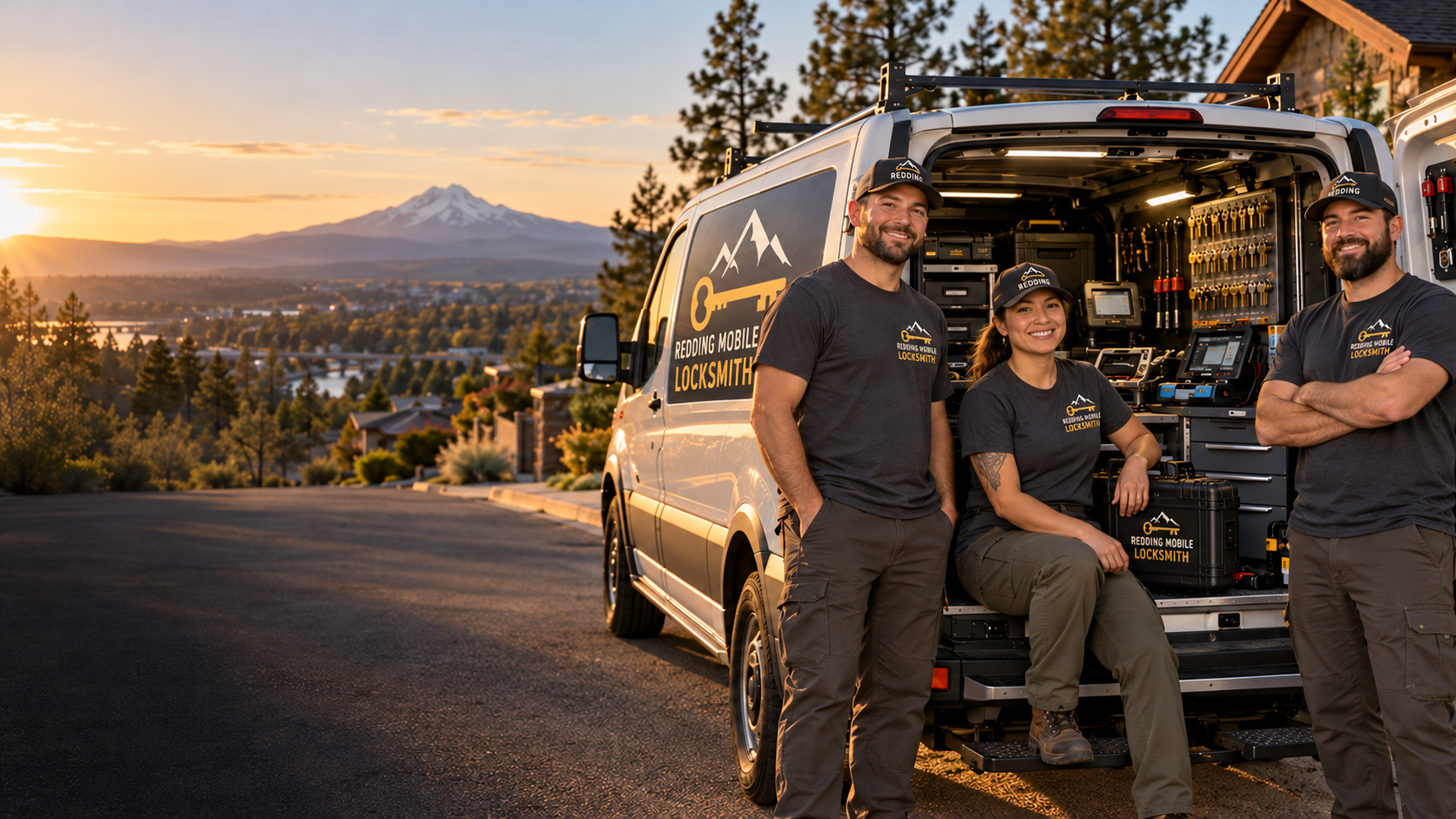
We arrive in a branded service van with the equipment for cutting and programming. After confirming the vehicle and your connection to it, we select the correct blank or fob, cut the blade if needed and connect our equipment to the vehicle's system.
Programming varies by vehicle, but the goal is always the same: teach the vehicle to accept the new key and, where possible, to reject the lost one. We then test everything. The door must unlock, the engine must start and keep running, and every button on the remote must do its job.
If you want a spare, this is the moment. It is simpler and more sensible to program two keys in one session than to arrange a second visit. The related key programming page explains the electronic side of the work, and our automotive locksmith page covers vehicle work more widely.
Afterward, we recommend keeping the new key somewhere that is not the vehicle. Many people leave a spare in the glove box, which defeats the purpose, since anyone who opens the car also gets the spare. A spare at home, or with a trusted person, protects you better.
Related help around Lakehead
If you are locked out of the vehicle rather than missing the key, see our car lockout in Lakehead page. If the key is lost and the house keys went with it, the house lockout in Lakehead page and the rekeying in Lakehead page may also help.
Our phone line is coming soon, so please use the request form on the contact page. Include the vehicle details, the key type and where the vehicle is. We are a 24 hour mobile locksmith, so the form is read at any hour.
We also serve the surrounding area along Lake Shasta and Interstate 5. The Lakehead area page shows how our crews cover the region.
If your request involves several keys across several vehicles, such as a family with a truck, a car and a trailer tow rig, list them all. We can plan the equipment for each and, where it makes sense, handle them in one visit instead of several.
Common questions
How do I know what type of key my car uses?
Look at the key and the dashboard. A plain metal key has no electronics. A thick head suggests a chip. Buttons mean a remote. A push button start usually means a smart key. If you are unsure, send photos with your request.
Can a copy from a hardware counter start my car?
If your vehicle has a transponder chip, a copy that only matches the blade will open the door but will not keep the engine running. The chip must be programmed to the vehicle, which needs special equipment, and we bring it with us.
My key fell in the lake. Is it ruined?
Possibly. Water can corrode contacts and damage the chip or battery inside, and a key may work for a while and then fail. If a key has been soaked, treat it with suspicion and consider a replacement while it still works.
Can you program a smart key without the old one?
In many cases yes. We use equipment that connects to the vehicle and pairs a new fob. You will need to show identification and paperwork proving the vehicle is yours. Tell us how many fobs the vehicle had when you contact us.
Should I get a spare while you are there?
Yes, if you can. Programming two keys in one visit is simpler than arranging a second trip, and a spare held somewhere safe makes the next loss far less stressful. Tell us how many keys you would like.
How do I request car key replacement in Lakehead?
Our phone line is coming soon. Use the request form on our contact page and include the vehicle details, the type of key and the location. We are a 24 hour mobile locksmith and will follow up using the details you give.