
Home / Dunsmuir / Car Key Replacement in Dunsmuir
Dunsmuir car keys
Replacing a Car Key in Dunsmuir: Starting From Zero or From One
Picture a neighbor in Dunsmuir helping another neighbor whose only car key has vanished. This page explains what replacement looks like when no spare exists and when one is still in hand.
A neighbor, a driveway and a missing key
Imagine two neighbors on a sloping Dunsmuir street. One has a car that will not move because the key has disappeared somewhere between the house and the grocery run. The other, who happens to be home, walks over with a flashlight and a cup of coffee. Together they check the coat pockets, the seats, the porch steps and the planter by the door. Nothing turns up.
This is an invented scene, though most people in a small town know the feeling. Cars are essential here, with winter roads, long drives along Interstate 5 and few places to rent a replacement. A lost key is not only a nuisance. It can shut down work, appointments and a whole week of plans.
The way forward depends heavily on one question: is there a spare key anywhere, or is this the only one? The rest of this page splits the answer in two. It explains replacement starting from zero keys, replacement starting from one, and the choices that follow, with the canyon and its winters in mind.
The keys on a modern car, briefly
Car keys have changed. The old metal key that did nothing but turn a lock has given way, on most vehicles, to keys with a hidden chip, a remote or a proximity fob. The chip in the head of a key tells the engine computer that the key belongs to the car. Without that recognition, the engine may crank but will not start.
Some keys have buttons for locking and unlocking, and some have a start button on the dash and a fob that stays in your pocket. A few older vehicles still use a plain key. Which one you have decides the work. Our guide on car key types in plain words helps you identify yours. If you are unsure, look at the head of the key: a thick plastic head often hides a chip, while a thin all metal key may be plain. A button on the dash instead of a slot usually means a proximity fob.
A replacement therefore has two jobs. The first is making the key physically fit, if there is a blade. The second is making the car accept it, if there is a chip or a fob. A professional with the right equipment handles both, usually at the vehicle. The page on car key replacement describes the service in general.
Starting from zero: every key is gone
When no key exists, nothing can be copied. The crew must build a key from information about the vehicle. For a plain key, that may mean working from the lock or from the vehicle details you can provide. For a chip key or a smart fob, it also means introducing a brand new key to the car as if it were the first.
This is a bigger job than adding a spare, and it often takes more equipment and care. Still, it is routine for a trained team. Tell us the make, model and approximate year, and whether the vehicle has a key slot or a start button. Those answers tell us what to expect and what to bring.
You will also be asked to show that the car is yours or that you have the right to ask for the key. Registration and photo identification are the usual route. If the vehicle belongs to a relative or a neighbor you are helping, bring a note from the owner. Our field guide lost every key, what to gather is a short checklist.
Starting from one: a working key in hand
If you still have one working key, the picture is far better. A second key can be cut from the first, and for a chip system the new chip can often be added while the original is present. There is less waiting, less guesswork and rarely any need to move the vehicle at all.
People tend to ignore this moment because nothing feels urgent. The key works, the car runs, life goes on. But a spare made now is a gift to your future self, and it costs far less in effort than a replacement made after the last key is lost. Our note on a spare key now versus later lays out the case.
Spares also help neighbors. If a trusted person nearby holds a copy, a lost key becomes a short walk instead of a long day. Pick someone reliable, give them the key in an envelope and tell them what it is for. Agree on when it may be used. A good spare arrangement depends on trust and clarity.
Keep it practical. A spare held by a neighbor should be labeled in a way only the two of you understand, not with a name and address. It should not live on a hook where visitors can see it. And if you move, change jobs or fall out with that neighbor, take the key back and make a plan for another one.
Neighbors helping neighbors, and the limits
Helping a neighbor with a car problem is a long tradition in small towns, and it works well for many things: a jump start, a ride, a search for the missing key. Helping with a locksmith request is fine as long as the owner is involved. A locksmith must confirm that the person asking has a right to the vehicle.
If you are the helper, gather what you can for the owner. Write down the make, model and year, take a clear photo of the dashboard and the key slot or button, and find the registration. Offer to wait with the owner. These small acts make the request clearer and the visit shorter.
If you are the owner, be ready to speak for yourself. A helper cannot authorize a key replacement for a car that is not theirs. Have your identification and proof of ownership nearby, and let the helper handle the rest. The process is simple, but it depends on the owner being present or reachable.
One more point: do not hand over your registration, identification and key details to anyone who offers help unasked. Share them only with the crew you have asked for, once you are confident of who you are dealing with. A uniformed team in a branded service van, arriving after a request you made, is the pattern to expect.
Cold weather and a missing key
Dunsmuir has cold winters, and cold plays a role in key trouble. Fobs run on small batteries, and cold weakens them. A fob that seems dead may only need a fresh battery, and a replacement key is not needed at all. Our note on key fob battery basics shows what to try first.
Cold also affects the lock. Moisture inside a door lock or an ignition can freeze, and a key that stuck once may stick again. If your key will not turn, do not force it. A bent or broken key makes the job larger. Tell the crew what you felt, and whether the steering wheel is locked.
Waiting outdoors in winter has its own risk. If the vehicle is your only shelter and the key is missing, stay warm and ask for help promptly. Nothing about a key is worth a chill. The crew will plan around the weather, and a note about snow, ice or a slick slope helps us prepare the van.
Steep streets, tight lots and the canyon setting
Dunsmuir sits in the upper Sacramento River canyon, with Interstate 5 and the railroad running through town. Houses climb the slopes on steep lots, and parking is often angled or narrow. When you write in, describe where the car sits: on the street, in a driveway, on a pullout or in a gravel lot behind a building.
This detail matters because the crew works beside the vehicle. A level space for the van, enough room to open a door and a safe place to stand are all part of the plan. If your car is on a hill, mention the grade and whether the parking brake is set. That keeps everyone safe while the work is done.
Also say whether the vehicle can move. If a car is stuck in snow, blocked by another car or parked in a place a van cannot reach, the crew may need a different plan. A short description lets us decide whether a visit is possible and what to bring.
Highway travel is part of life here. If you lose a key while driving along Interstate 5 and end up at a pullout far from home, say where you stopped and what the surroundings look like. We cannot work from street names we do not know, but a plain description of the turnout, the lot or the shoulder points the crew in the right direction.
Chips, programming and why timing matters
The chip in a modern key is the part most people do not think about. It carries a coded signal, and the car's computer checks that signal when you turn the key or press start. A key without the right code will turn but not start the engine. That is why a duplicate from a counter sometimes fails.
Programming introduces the new chip to the car. The crew connects equipment to the vehicle, runs the right procedure and confirms that the car accepts the key. Some vehicles allow this with a working key present. Others require a more involved process, especially when all keys are gone. The vehicle details tell us which applies.
Read transponder keys explained for a plain description of the chip, and key programming for the service. If an old key remains in the system after a loss, the crew can also talk about removing it, so a lost key cannot start the car.
Trucks, SUVs and vehicles with a history
Many Dunsmuir drivers keep older pickups, sport utility vehicles and station wagons running for decades, and the older the vehicle, the more varied the key. One may use a plain metal key with cuts on both edges. Another may use a chip key that was added later. A third may have a fob that no one has seen in years.
Older vehicles can also have worn ignitions and worn door locks. A new key cut to factory specifications may feel stiff in a lock that has been turned countless times. If the lock is tired, a replacement key alone may not fix the trouble, and the crew may recommend repairing the lock too. Our note on ignition trouble signs lists what to look for.
If you bought the vehicle used, you may not know how many keys exist or who holds them. That is a good reason to have new keys made and to ask about reprogramming, so that any key from the previous owner no longer starts the car. It is the vehicle version of rekeying a house, and it is worth a conversation with the crew.
What to prepare and how to ask
Before you write in, gather the basics: make, model, approximate year, whether the car has a key slot or a button, and whether any working key exists. Find the registration and your identification. Take a photo of the dashboard if you can. If the car is stuck in snow or on a slope, note that too.
Use the request form on the contact page, since the phone line is coming soon. Name Dunsmuir, describe where the car sits and whether the engine is on. If the key may be inside the car, say so, since that is a lockout as well. Our page on car lockout in Dunsmuir covers that side.
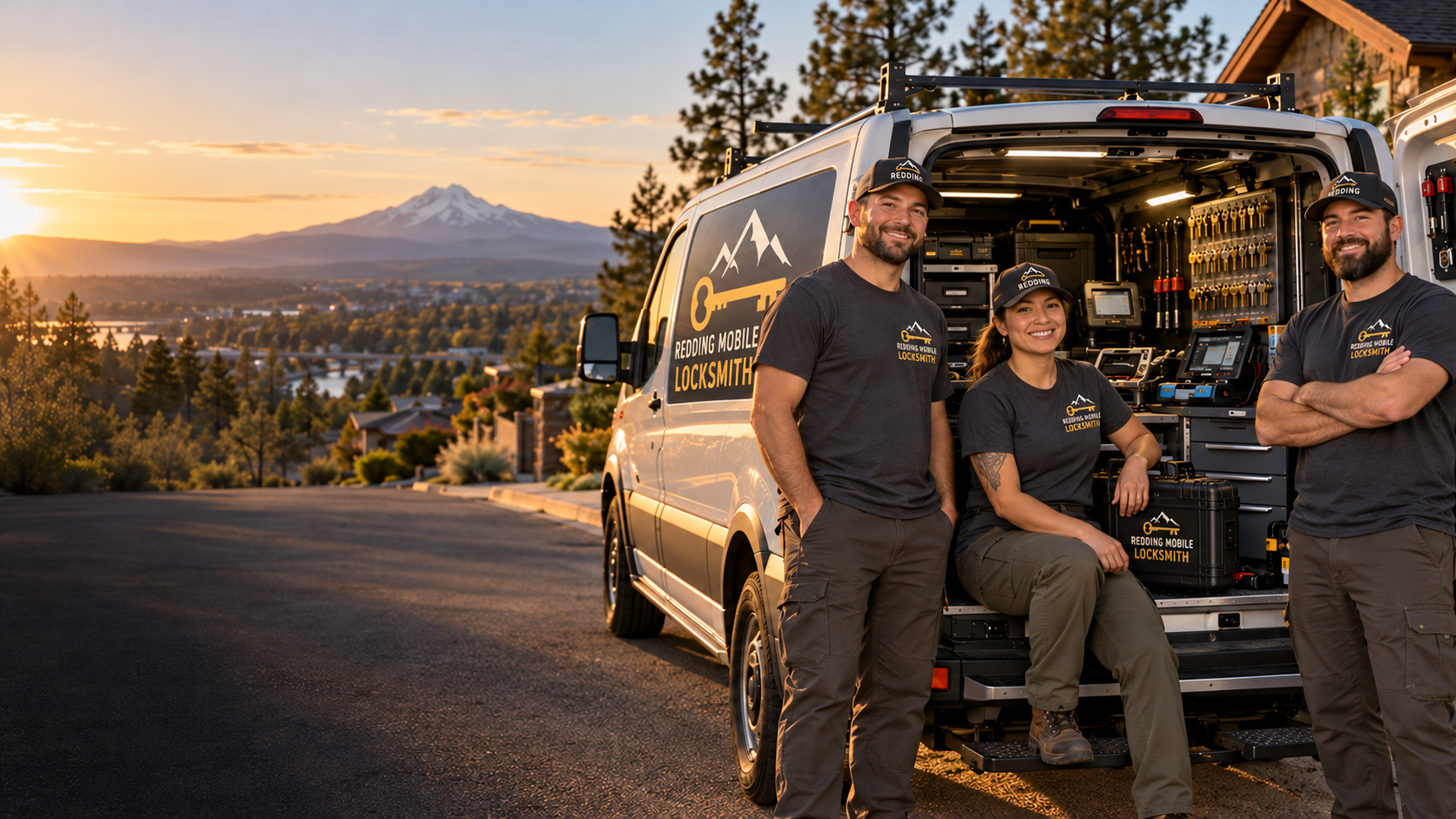
When the crew arrives, it comes in uniform in a branded service van with cutting and programming equipment on board. It confirms who you are, works out the right key, makes it and tests it with you in the lock and the ignition. Redding Mobile Locksmith leaves you with a key that works and a clear idea of what to do next time.
Other help close to home
A lost key can come with other lock questions. If the missing ring also holds house keys, see rekeying in Dunsmuir for how to make old keys useless. If a lock is sticking, lock repair in Dunsmuir explains the signs, and house lockout in Dunsmuir covers a locked front door.
For the wider range of vehicle work, the automotive locksmith page covers keys, lockouts and ignition trouble together. The Dunsmuir page describes the town and the way our crew works here, and the McCloud and Weed pages cover nearby towns.
Whichever road you are on, the lesson is the same. Make the spare while you still have one key. Keep it somewhere safe and known. And when the day comes that a key goes missing, take a breath, gather your papers and ask for help early.
A last habit for families and shared households is a simple key note kept at home. List each vehicle, how many keys exist, where each one lives and who may ask for another. Update it when a key is added or lost. When trouble comes, that one page answers half the questions the crew will ask, and it lets a neighbor or relative help you without guessing.
Common questions
Can I get a new key if I have no spare at all?
Usually yes. The crew uses information about the vehicle to cut a key and, for chip or smart systems, programs it to the car. It is a bigger job than adding a spare. Have your registration and identification ready, plus the make, model and year.
Is it easier if I still have one working key?
Yes, much. A new key can be copied from the working one, and a chip can often be added while the original is present. It is smoother, calmer and usually involves no towing. If you have one key now, making a spare is a wise step.
Can my neighbor request a key for my car?
A neighbor can help gather details and wait with you, but the owner must be able to show a right to the vehicle. Expect to present registration or a title and photo identification. If you cannot be present, a note from the owner may help.
Why does my new key turn but the car will not start?
The key likely lacks the right chip, or the chip was never introduced to the car. The metal may fit the lock but the engine computer does not recognize the key. Programming the chip to the vehicle is the usual remedy.
Could a weak fob battery be the problem?
Yes, especially in cold weather. A fob that works only up close or shows a warning light may need a new battery, not a new key. Try a fresh battery first if you can. If that does not help, tell us what you see.
How do I ask for help in Dunsmuir?
The phone line is coming soon. Use the request form on the contact page and tell us you are in Dunsmuir, the make, model and year, where the car sits and whether you have any working key. Mention snow, ice or a steep slope if they apply.